Seattle Police Advance Private Economic Interests, Dub Themselves “Marauders”


For years, a 501(c)(6) downtown business improvement area corporation in Seattle has used the Seattle Police Department (SPD) as a contractor to advance their own private economic objectives.
Last month, the Washington State Supreme Court said that the public should be able to request records from that 501(c)(6), DBIA Services Inc., allowing greater insight into how taxpayer resources are leveraged.
While the existence of contractual relationships between DBIA Services and the SPD has been previously reported, the contracts themselves have never been released publicly. The city of Seattle’s online contracts portal does not publicly show the contracts either.
However, since the Washington State Supreme Court decision, DBIA Services has provided a handful of their contracts to HardPressed following a public records request.
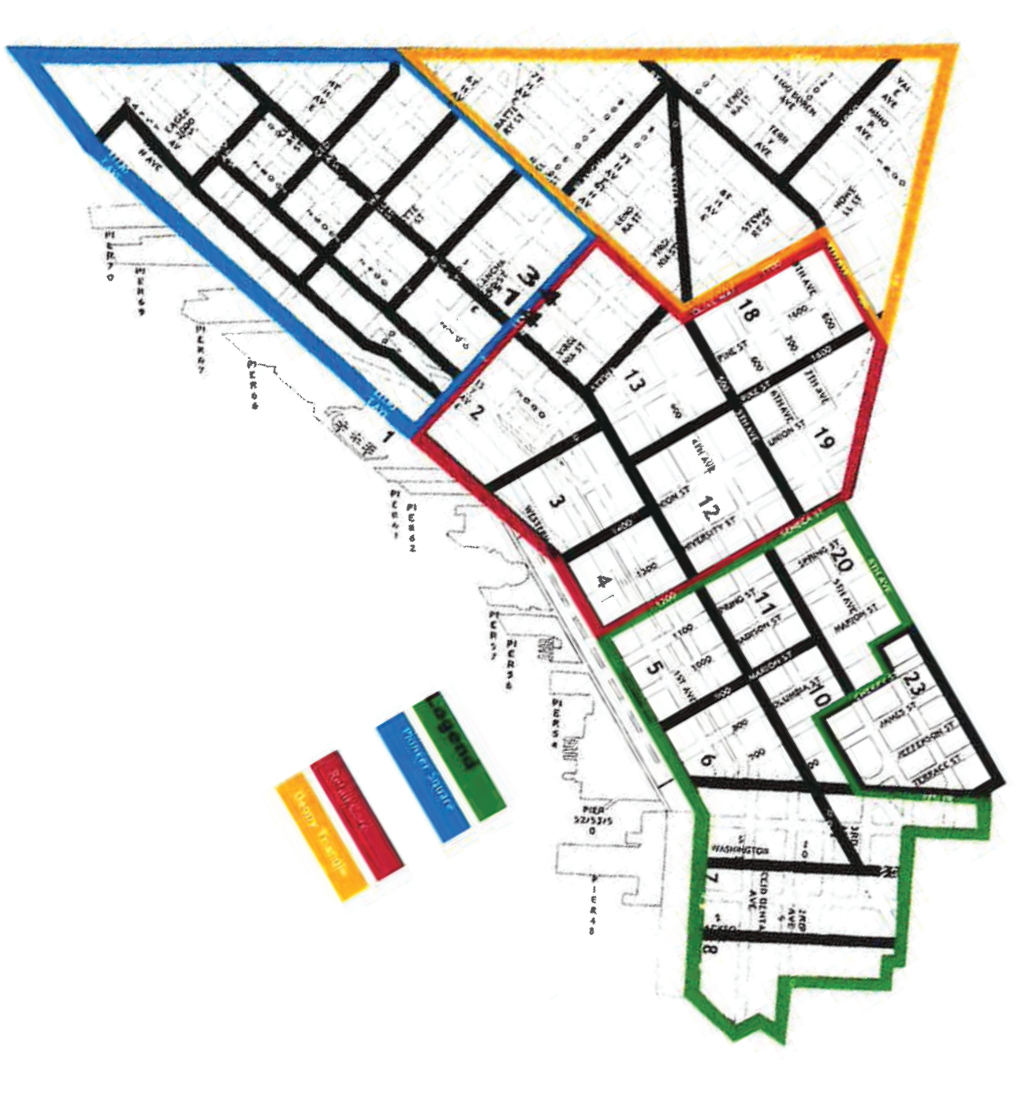
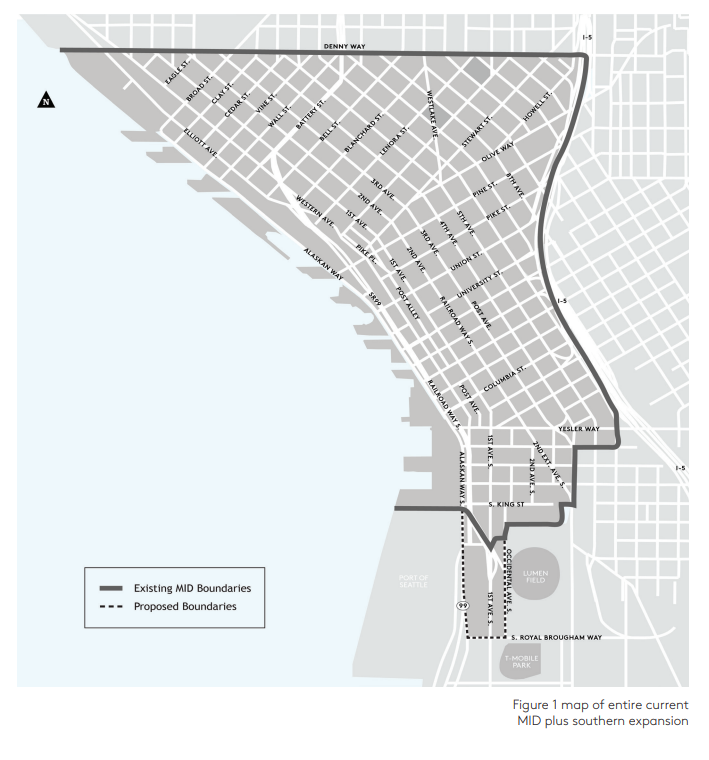
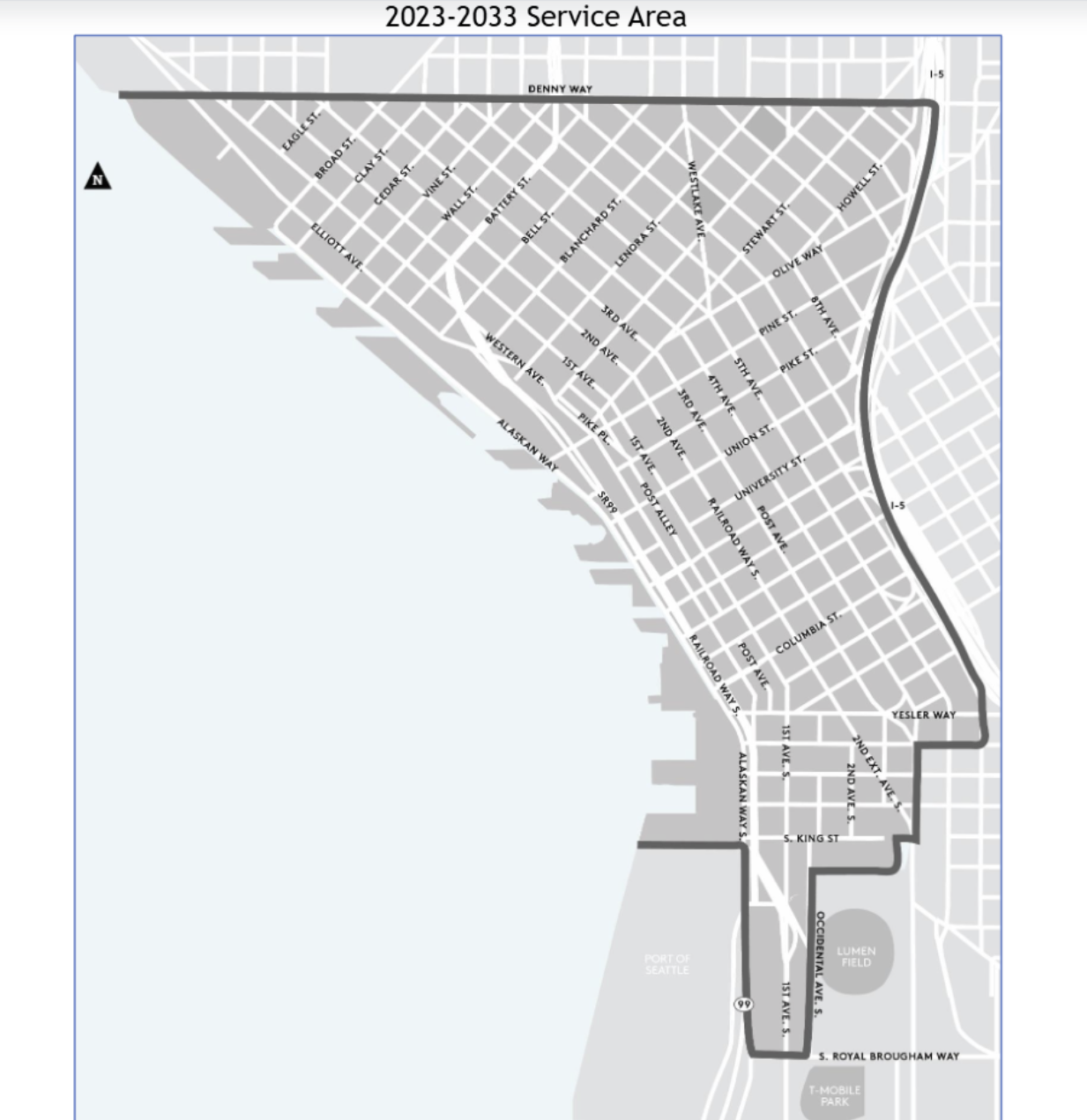
A review of the contract documents signed in 2019, 2020, 2022, 2022, 2023, 2024, and 2025 show that off-duty SPD officers are instructed to “address civility issues and illegal street behaviour that detracts from a positive experience” within the boundaries of the city’s Metropolitan Improvement District (MID), including enforcing standard crimes of poverty such as violations of the sit and lie ordinance, open containers, illegal vending, aggressive panhandling and public urination.
In addition, SPD is contractually required to “approach public safety through the lens of economic vitality,” and that the downtown MID ratepayers are “investing in a public safety environment that supports a positive residential, retail and entertainment experience that drives the economic engine of Seattle.”
One contract explicitly states that DBIA payments are made to SPD to “help further provide for safety and protection of… businesses and other uses, and property owners within DBIA boundaries.”
The contracts obligate the SPD to maintain “a pool of committed [off-duty] officers as this will determine the effectiveness and ultimately the continuation of the program.”
Seattle ethics law prohibits city personnel from being used for anything other than a city purpose.
The SPD, Mayor Katie Wilson’s office and the Seattle Ethics and Elections Commission were all contacted for this report. None responded to a request for comment. DBIA Services responded to HardPressed’s request for comment by processing it as an official public records request.
DBIA Services contracts with the SPD include geographic task orders, with various contractual obligations for SPD overtime staffing. In 2024, the orders made by DBIA Services for SPD resources accounted for only two percent of DBIA Services’ total operating costs. The 501(c)(6) has also steadily increased spending on private security, including a payout of over $2 million in 2024 to the private contractor Iron & Oak Protective Services according to Form 990 tax filings.
HardPressed asked the SPD for numbers comparing the true accrued city costs for executing DBIA Services task orders and the payment amount DBIA Services pays the city for the task orders in 2025. The SPD did not respond.
While city officials and SPD’s former federal monitor have touted SPD’s data transparency, no public data or dashboards exist to track taxpayer financed SPD overtime spending.
The Seattle Times previously found chaos after it investigated SPD’s overtime record keeping and Publicola has reported that SPD’s overtime budget exceeded $53 million in 2025. DivestSPD has reported that SPD overtime spending itself is driven by SPD emphasis patrols and that half of the top 10 highest paid officers at SPD in 2022 were assigned to the West Precinct, where DBIA Services contractually obligates the city to maintain a pool of officers.
The contracts also require SPD to produce “detailed Activity Reports for each MID Emphasis shift worked” which are required to be retained for at least six years prior to their destruction. The department is also required to designate a Lieutenant or above to act as DBIA Services Liaison Officer.
“Operation Scarecrow”
The DBIA Services contract documents state that “since 2001 the success of the MID Emphasis program has always been the result of the outstanding officers who staff it. These officers view the MID shifts as much more than just an off-duty job.”
One of the officers who led an SPD emphasis patrol in 2020 dubbed “Operation Scarecrow” was Sergeant Sean N. Moore.
Moore was placed in charge of SPD’s 2M90 bike squad in 2016 and by 2020 the team of officers, including Dale Davenport, Brandon Dorr, Erik Eastgard, Grant Mayer, David Warnock, Kelly Spady, and Alex Pratt had dubbed themselves “the Marauders” in name tags with pirate iconography and in internal emails, including one informing Pratt he was “Captain of the Marauder ship today.”
In another set of emails obtained by HardPressed from the same period, Moore joked with Centralia cop Corey Butcher about “zombies” walking around downtown Seattle and “the amount of lead ya give ‘em.. ha ha ha.”

HardPressed has previously reported that Moore considered protesters “hands up or not” a threat during the 2020 protests and that he also intimated in 2020 that a potential lethal force encounter “would be very very very. Not that it’s ever ‘good’ but … you know the rest…”
The planning documents for Operation Scarecrow have never been published until now and show that SPD felt that two 2020 shootings in downtown Seattle only a day apart had “contributed to an increased perception of crime and disorder in the surrounding area.”
SPD plans state that, “in response, the West Precinct Bicycle Patrol Unit has initiated a proactive operation identified as ‘Operation Scarecrow.’ The objective is to prevent and deter crime, violence, and quality of life issues with high visibility proactive policework” and referred officers to “Downtown Emphasis Patrol” incident action plans, which HardPressed has not yet obtained or reviewed.
Downtown Activation Plan
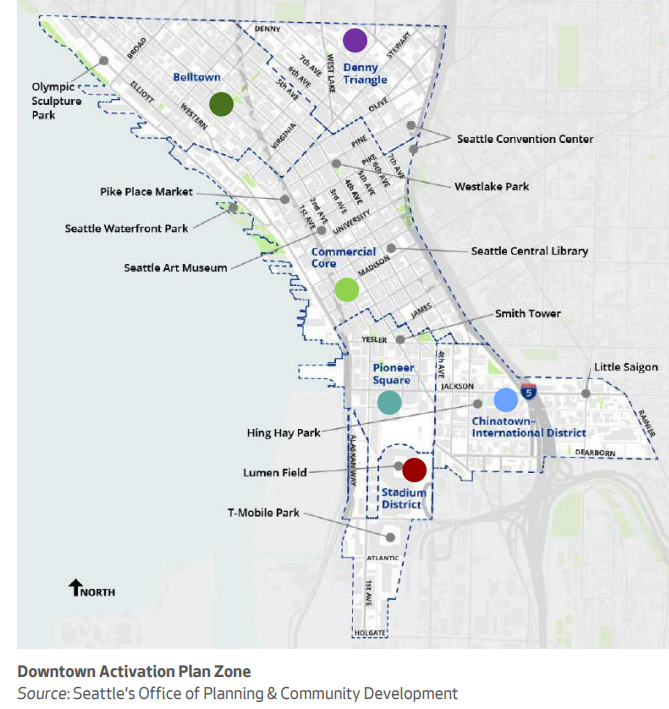
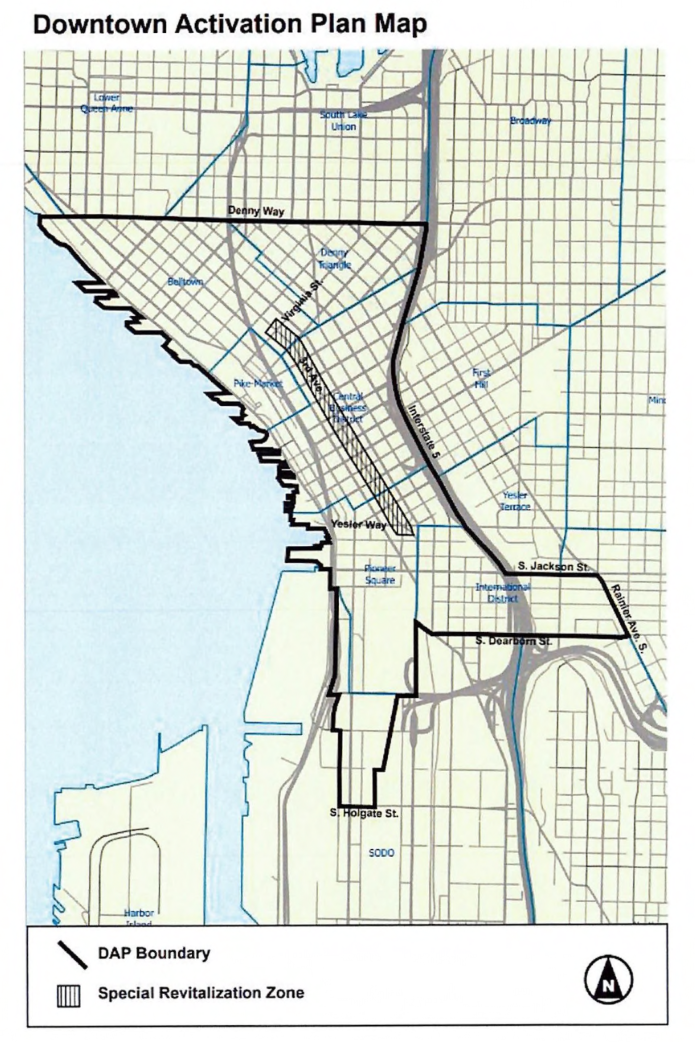
On June 28 2023 then-Mayor Bruce Harrell announced the establishment of a Downtown Activation Plan (DAP) as anti-sweep protesters drowned out his speech. A year later, Interim SPD Chief Sue Rahr wrote to King County Detention Director Allen Nance that “it’s my understanding that, per past practice and agreements, the jail will accept bookings regardless of category, when the City of Seattle and/or the Seattle Police Department identify the need for a special emphasis or area of focus. To that end, I am writing to advise that the DAP Zone will be subject to special emphasis… We will be seeking to book all arrestees for any criminal activity that we cannot prudently divert.”
Within an Amicus filing to the Washington State Supreme Court, calling for the application of the Washington State Public Records Act to DBIA Services, the American Civil Liberties Union (ACLU) of Washington wrote that “data consistently corroborates that SPD engages in discriminatory policing against people of color in the present era,” and that within Belltown alone in 2025, “nearly 40% of all arrests made in Belltown are of Black people,” despite roughly making up only six percent of the population.
In September 2024, the Downtown Seattle Association boasted that its supporters had helped pass legislation to establish banishment zones for people with drug convictions downtown. That same month, Harrell’s Deputy Mayor Tim Burgess wrote to Rahr, sharing a photograph of 3rd Avenue in downtown, barren of people. “Thank you again for the vital role SPD plays in this work. Arrests in the DAP Zone are up over 30% compared to the same period last year,” Burgess wrote.
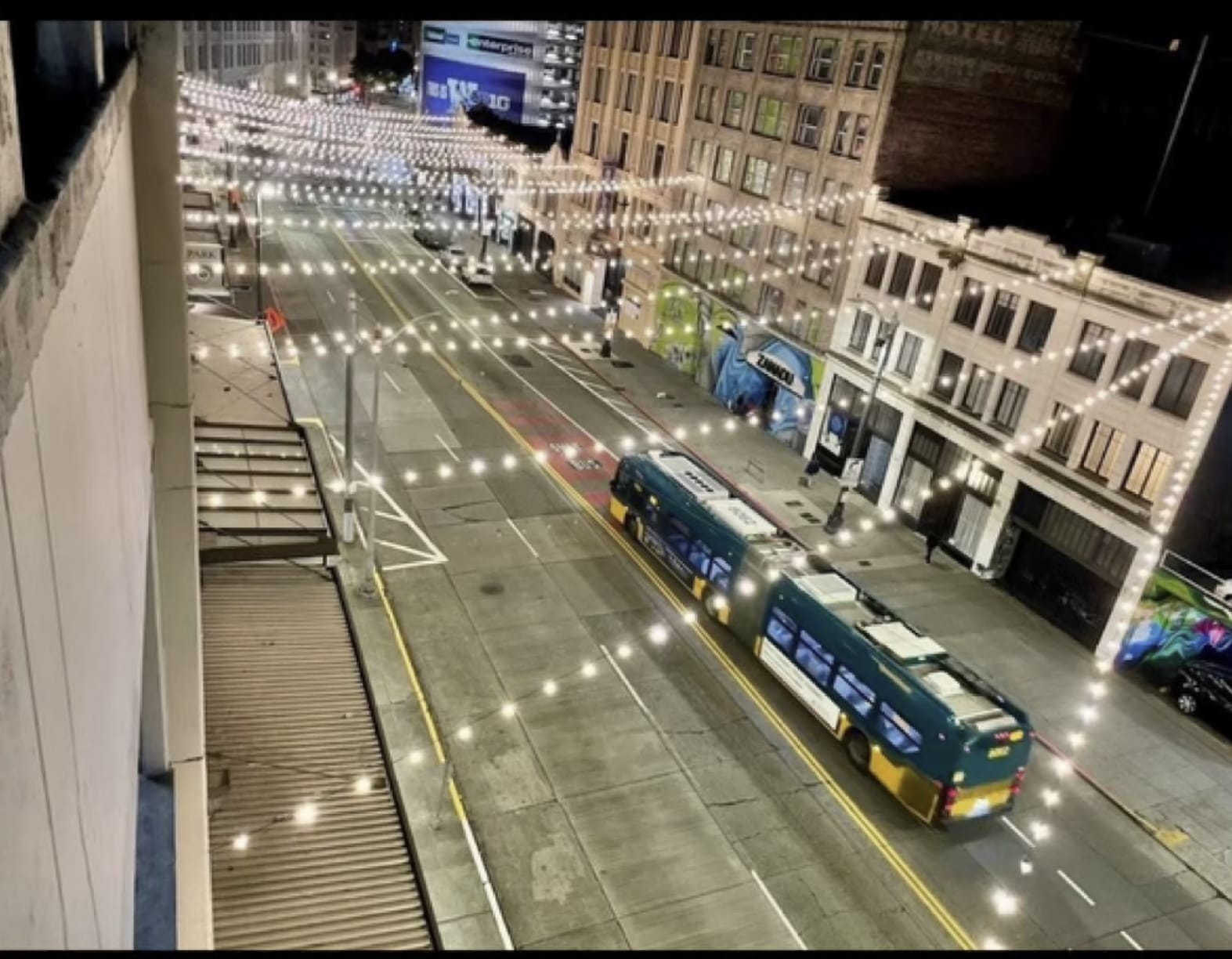
Rahr responded, “I want to express my deep appreciation to the the [sic] SPD team that has been working relentlessly, in deplorable conditions to make this picture look so good. No one can enjoy the ambience if they don’t feel safe.”
Update 2/7/2026: DBIA Services wrote to HardPressed that SPD Lieutenant Tony Bailey is currently the DBIA liaison officer, and that Operation Scarecrow was not a DBIA Services contractual emphasis patrol.
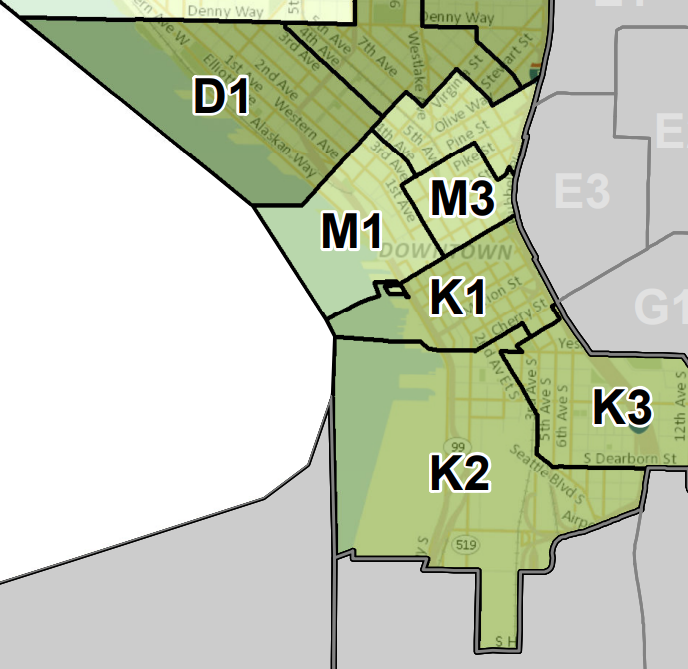
Excerpts of maps from DBIA Services contracts are presented below: