
Seattle Police Officer Who Reportedly Threatened To Kill Cops May Be Helping Trump's FBI Identify “Extremists”

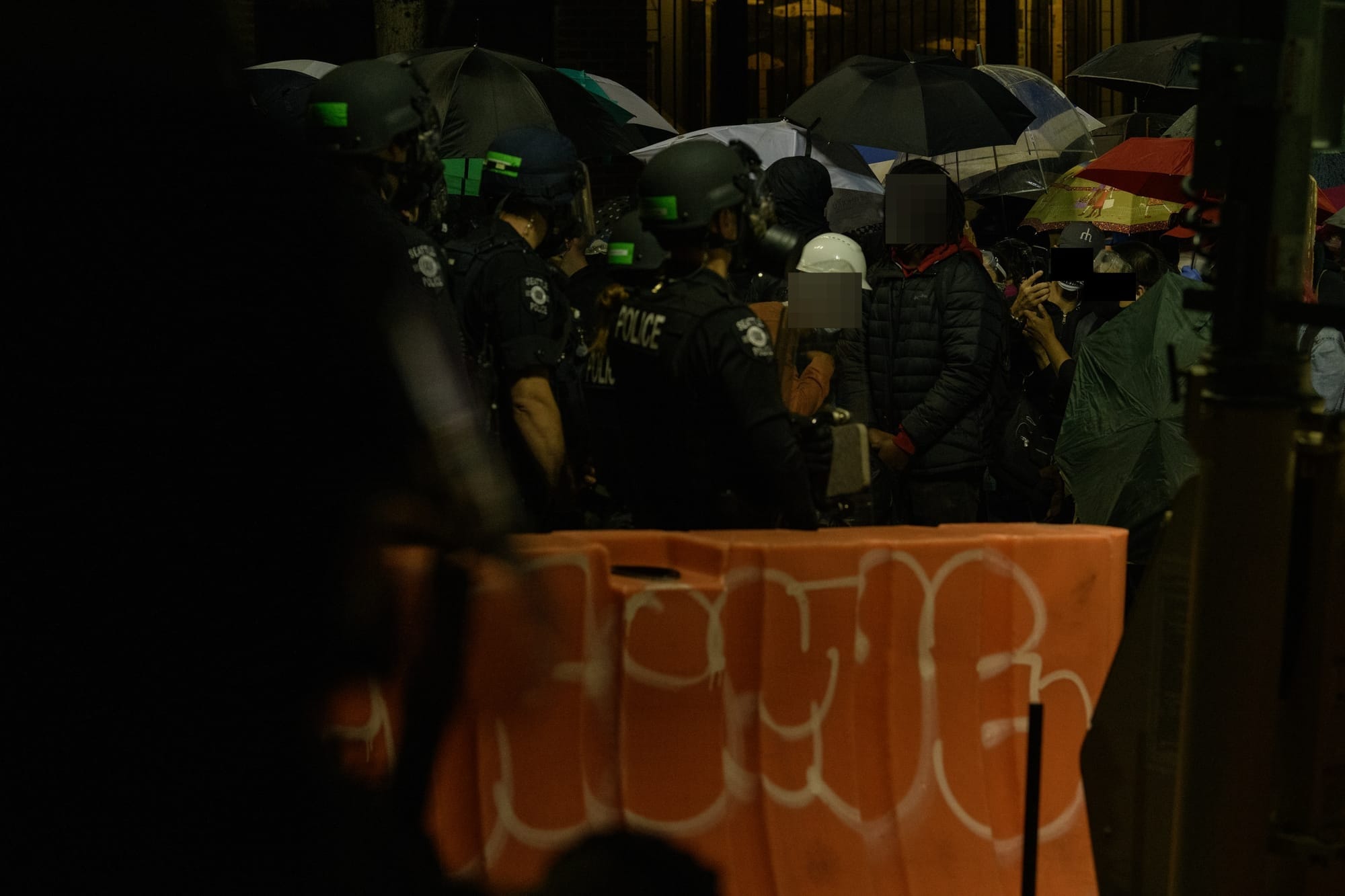
Seattle police officer Wesley Friesen was 27 years old when he was pulled over by the Washington State Patrol (WSP) in November 2004, along the suburban stripmall-lined Highway 99 in Lynwood, Washington.
According to the Seattle Times, Friesen’s speech was slurred and he had watery eyes. A WSP Trooper asked him to step out of his car and take a sobriety test, which Friesen failed. According to the Seattle Times, “Friesen took two breath tests which registered blood-alcohol content of 0.228 percent and 0.226 percent, nearly three times the legal limit.”
Arrested for DUI and handcuffed on the side of the road, the Seattle Times reported that Friesen told the WSP troopers on scene “If I get out of these cuffs I will [expletive] kill you both.”
At the time of his arrest, Friesen was a young Seattle Police Department (SPD) officer and still remains with the department today. Friesen’s DUI charge was eventually dismissed through a judgement of deferred prosecution in 2010.
SPD did not respond to multiple requests for comment.
Friesen was eventually assigned to one of multiple FBI Seattle Joint Terrorism Task Force (JTTF) units at an unspecified date according to an SPD document obtained by HardPressed through a public records request.
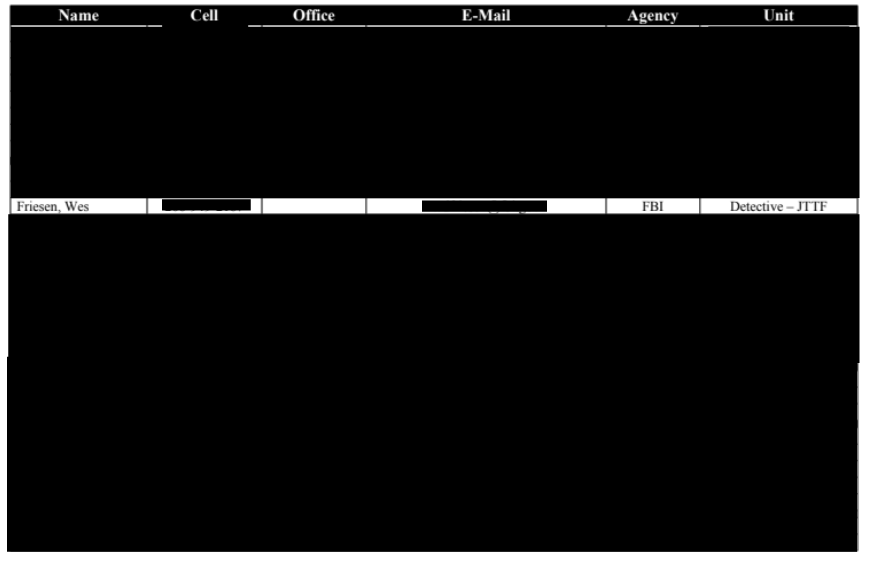
In 2020, Friesen operated as a JTTF detective, at one point working inside Cal Anderson Park’s CHOP (Capitol Hill Organized Protest) demonstrations surrounding SPD’s East Precinct. That summer, he was also tasked with reviewing suspicious behavior reports from The Seahawks and social media monitoring done by the King County Sheriff’s Office.
Real Change has reported that another FBI JTTF officer was involved in surveillance of the 2020 protests and that another FBI Seattle unit named “C1” mass-recruited informants to infiltrate the CHOP.
It's no secret that the FBI uses informants or that the FBI used surveillance during the 2020 protests across the country. However, since Trump’s reelection, the administration has increasingly directed the FBI’s JTTFs to root out supposed “terroristic activities.”
Two weeks ago, FBI JTTFs were ordered to escalate their hunt for domestic “extremists” in a Department of Justice (DOJ) memo that was leaked to the press. This new memo orders FBI JTTFs to assist with the compilation of “a list of groups or entities engaged in acts that may constitute domestic terrorism.”
Asked if Friesen was still serving as a JTTF officer, the FBI Seattle office wrote to HardPressed that “The FBI does not routinely confirm the identities or assignments of personnel to ensure safety. At the guidance and direction of our Office of General Counsel, the Privacy Act prohibits us from commenting, unless it’s a Senior Executive Service employee or there is some other circumstance that rises to the level of an exception to the Privacy Act.”
SPD did not respond when asked to confirm whether Friesen is still a JTTF task force officer. Under Attorney General Pam Bondi’s December 4th memo, this suggests that a man who reportedly threatened to kill cops may continue to be an integral part of deciding who the FBI and DOJ identifies as domestic terrorists under the Trump administration’s leadership.
This morning The Guardian revealed that the FBI has opened numerous NSPM-7 domestic terrorism investigations across the country, including multiple cases in Seattle. NSPM-7 is Trump’s National Security Presidential Memorandum entitled “Countering Domestic Terrorism and Organized Political Violence” which the ACLU (American Civil Liberties Union) warns the Trump administration will use to target nonprofits and activists. The Intercept has reported that for those later designated as terrorist groups by the Trump Administration, the Pentagon has not ruled out killing them within U.S. borders without trial.
While SPD officers are prohibited from opening investigations or collecting “information on account of a lawful exercise of a constitutional right” according to SMC 14.12, the FBI is not governed by city statutes. Under FBI policy and jurisdiction, SPD task force officers can open investigations called “assessments” while operating with the FBI, effectively ignoring local laws designed to protect Seattleites from invasive government overreach and surveillance.
These FBI assessments do not require probable cause, reasonable suspicion, or factual predication of a crime to legally justify initiating data collection, investigation or surveillance. SPD officers participating in these investigations through their work on federal JTTF task forces risk operating at odds with city human rights law.